“Overcome Challenges During the Drug Development Lifecycle”
This playbook explores how implementing an ERP solution to capture data, track spending, improve communication, address bottlenecks, and reduce risks accelerates the drug development process.
Biopharma companies face myriad challenges during the drug development process, so the right technology is essential to move new therapeutics from discovery and development to commercialization with as few roadblocks as possible. Replacing legacy processes at all stages of the drug development process can ensure life sciences companies adhere to timelines and budgets, improving speed to market.
This playbook explores how implementing an ERP solution to capture data, track spending, improve communication, address bottlenecks, and reduce risks accelerates the drug development process. It will show how a cloud-based ERP can help biopharma companies:
Manage business complexities during discovery and development
Create a roadmap for the clinical research phase
Achieve seamless crossover between clinical operations and finance department
Assist with FDA review and compliance
Navigate transition from drug development to launch
Continually monitor data and metrics to ensure commercial success
Download Now
“Responsible data use: Navigating privacy in the information lifecycle”
Brought to you by OneTrust
In an era defined by data-driven interactions, safeguarding privacy is paramount at every stage of the information lifecycle. From fostering transparency to ensuring appropriate retention periods, the bedrock of responsible data use rests upon good privacy management practices.
Unlocking the insights and strategies imperative to this evolving landscape, this eBook will guide you through the intricacies of privacy management across the information lifecycle. Dive in to discover more about:
Privacy by Design
Navigating Privacy Across the Information Lifecycle
Efficiency and Automation
Download the eBook now and learn more about responsible data use and data privacy through the information lifecycle.
Download Now
“Zero-Trust Adoption Driven by Data Protection, Cloud Access Control, and Regulatory Compliance Requirements”
Zero-trust initiatives are a key focus for many companies. Nearly 30% of organizations are already rolling out zero-trust initiatives to control access to their data and assets and more than 80% will have the capability within the next 18 months. Organizations are addressing cybersecurity challenges by enhancing identity and access management, privileged-access management, and data classification. They expect to see budgets for zero-trust initiatives grow modestly over the next 12 months.
Dark Reading’s 2023 Zero-Trust Survey of 124 IT and security professionals points to factors driving zero-trust adoption, including efforts to bolster data protection, enable better cloud access control, meet regulatory compliance requirements, and address risks related to a growing remote workforce. Many enterprises have implemented a zero[1]trust security strategy in the past year — or plan to do so over the coming 12 months — to address a variety of security use cases. By the end of 2024, more than 80% of the IT and security professionals in Dark Reading’s survey expect to have a zero-trust initiative in place at their organization. The primary drivers for zero-trust adoption are data protection, cloud access control, remote workforce[1]related risks, and regulatory compliance interest in zero-trust models cuts across organizational size and industries. Relatively small organizations and very large organizations appear to be adopting zero-trust approaches in equal numbers. Many of those who have deployed zero trust as well as those still in the process of doing so expect long-term benefits that extend beyond strong access controls and authentication. A high percentage of organizations already have key components in place for enabling zero-trust architectures. These include strong identity and access management (IAM) controls, multifactor authentication (MFA), single sign-on (SSO) capabilities, and endpoint detection and response mechanisms. Employing these controls, security and IT professionals mostly appear confident about their ability to address threats related to identity and access. But challenges remain, especially around password management, managing cloud access, enforcing least-privileged access, and managing privileged access. Over the next 12 months, many organizations plan to address these challenges by enhancing their capabilities in several of these areas — including IAM, privileged-access management, and data classification. A high percentage of respondents expect to see budgets for zero-trust initiatives grow over the next 12 months. Even so, the increases would likely be modest: The expected percentage increases tended to be on the lower side.
“Zero-Trust Adoption Driven by Data Protection, Cloud Access Control, and Regulatory Compliance Requirements””Zero-Trust Adoption Driven by Data Protection, Cloud Access Control, and Regulatory Compliance Requirements”
Download Now
“CX and the CIO: Trends Shaping Industries in 2023 and Beyond”
The role of technology leaders in the future of CX.
Explore the trends driving the future of customer experience (CX) and learn how technology leaders, especially CIOs, can future-proof the business by meeting the digital expectations of their customers.
Download Now
“Moving Tax to the Cloud: A Financial Perspective”
Cloud (Saas) technology is known for being a cost-effective solution with quicker implementations, minimal use of hardware, and low maintenance costs.
For your indirect tax function, regardless of whether you use native ERP functionality or an integrated on-premise tax engine to calculate tax, there are both external and internal costs to consider. Total cost of ownership (TCO) is one of the most important factors to evaluate when considering a move to a cloud-based tax solution.
Download this white paper to learn about:
What TCO is comprised of and how to reduce it
Costs when migrating from a native ERP to cloud
Costs when migrating from an on-premise tax engine to the cloud
How to future-proof your tax function to pivot with ease as your business expands
Download Now
“Intelligent Asset Management ARC Strategies”
What are today’s key asset-management priorities for maintenance and operations leaders?
Looking for new ways to increase asset uptime and production throughput? Leading companies are realizing these goals – and generating new business value – by embracing intelligent asset-management approaches.
A new report from ARC Advisory Group reviews how maintenance and operations leaders responded to questions about:
The top three challenges facing asset-intensive companies
Key capabilities when choosing asset management solutions
Top benefits of intelligent asset-management approaches
Future focus areas for asset management professionals
Ready to gain asset-management insights from industry peers? Read the ARC report.
Download Now
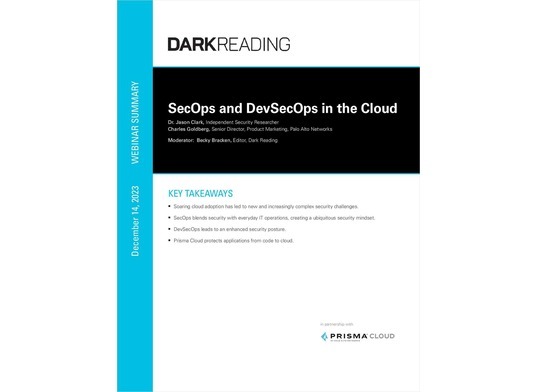
“SecOps and DevSecOps in the Cloud”
This is an executive summary of the “SecOps & DevSecOps in the Cloud” webinar that took place December 14th, 2023. The speakers were Dr. Jason Clark, independent security researcher, and Charles Goldberg, Sr. Director, Product Marketing at Palo Alto Networks. The webinar was moderated by Becky Bracken, editor at Dark Reading.
Rapid cloud adoption over the past few years has resulted in an increase in security incidents. As cloud offerings continue to grow and evolve, so does the necessity for security measures that keep pace with cloud development; companies can no longer afford to compromise between speed and security. Taking a DevSecOps approach to security, addressing vulnerabilities and reducing risk from the start of the software development lifecycle, is a strategic imperative.
Download this executive summary to learn how:
Soaring cloud adoption has led to new and increasingly complex security challenges.
SecOps blends security with everyday IT operations, creating a ubiquitous security mindset.
DevSecOps leads to an enhanced security posture.
Prisma Cloud protects applications from code to cloud.
Download Now
“Connecting Your People, Processes, and Data with Autodesk PLM”
PLM doesn’t need to be complex
Modern companies require a strategic approach that enables them to start small and scale their PLM environment as required.
Read advice from digital transformation experts CIMdata on why you need a connected product development solution that can grow with you.
Take your business to the next level. The new CIMdata analysis says Autodesk PLM won’t just grow your business—but help it thrive. Find out why.
Download Now
“Digitally Transforming Data and Processes with Product Lifecycle Management”
See how leading manufacturers are getting to market faster while improving product quality and profitability.
Every day, manufacturers juggle multiple CAD systems as they move from concept to delivery, opening their process to confusion, data loss, and delays. Autodesk PLM provides multi-CAD integrations that keep teams working in the tools they know and collaborating efficiently across your organization and with suppliers–regardless of file type.
Read how industry leaders use PLM software to remove product development collaboration barriers, accelerate processes, increase efficiency, and power agility.
Download Now
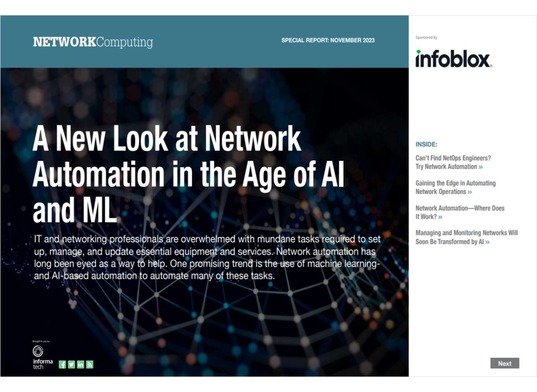
“A New Look at Network Automation in the Age of AI and ML”
A Network Computing Report | Sponsored by Infoblox
IT and networking professionals are overwhelmed with mundane tasks required to set up, manage, and update essential equipment and services. Network automation has long been eyed as a way to help. One promising trend is the use of machine learning and AI-based automation to automate many of these tasks.